

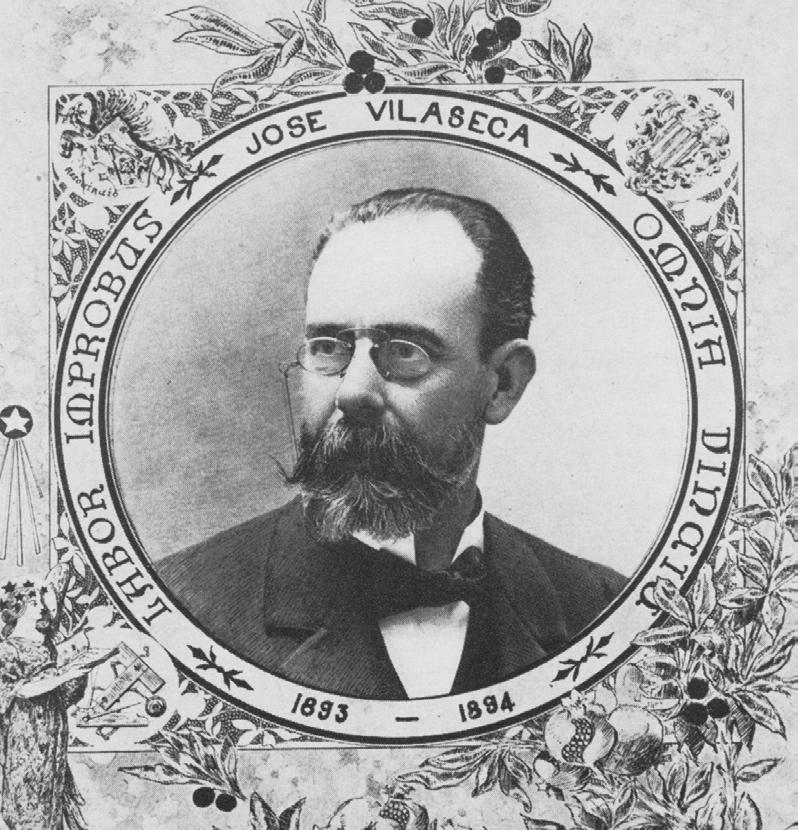
He trained as a master builder in Barcelona, but qualified as an architect in Madrid. While he was studying he travelled to several European countries, often with his great friend L. Domènech i Montaner.
A large part of his work prior to 1893 is regarded as Pre-Modernista, its style evolving with the use of Classical and Neo-Gothic features, as well as elements of Japonism, which influenced Modernista artists. In Barcelona this work includes Casa Enric Batlló (1895-1896; Passeig de Gràcia, 75; now Hotel Condes de Barcelona) and Casa Bruno Cuadros (1883; Rambla, 82), both in Barcelona, and the Arc de Triomf (1888; Triumphal Arch, Passeig de Lluís Companys).
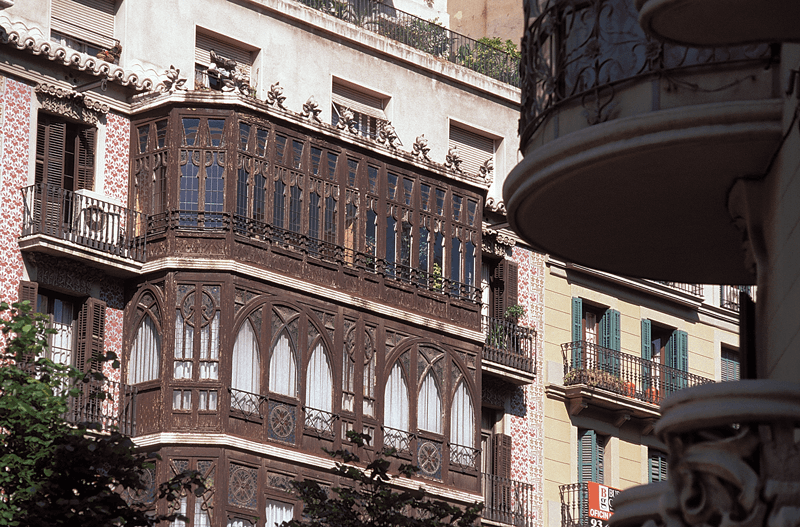
He was not an innovative architect in his conception of space, but he was as far as decoration was concerned due to his use of ornamental motifs of diverse origin, stained glass for windows and doors, wrought iron, etc.
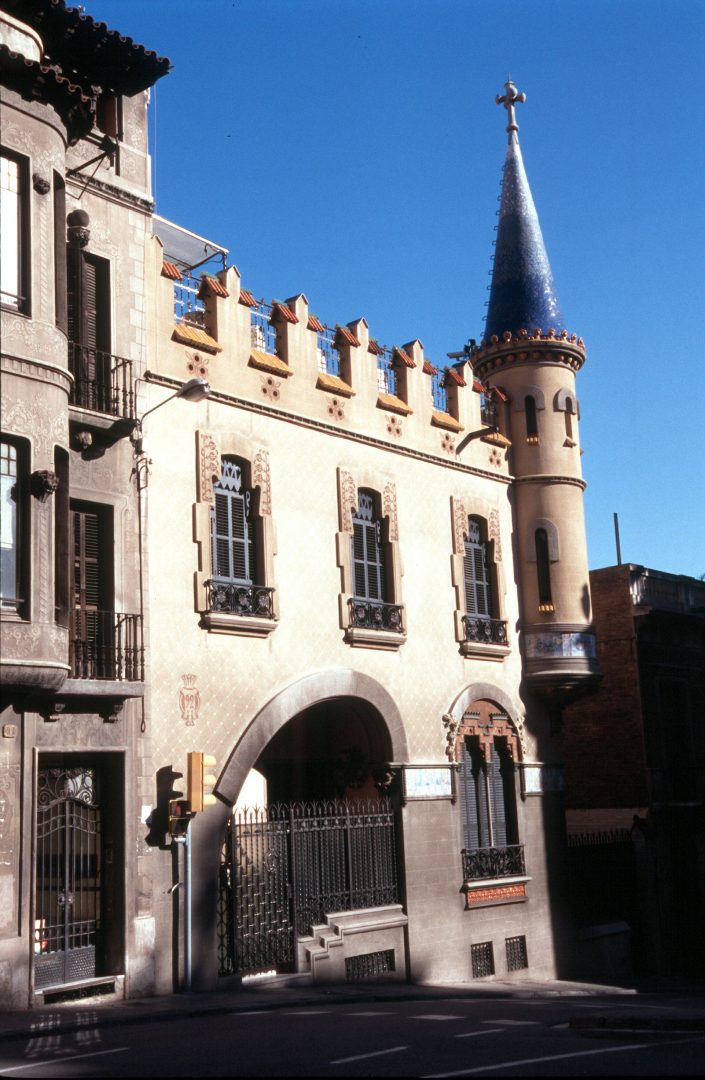
He worked on several projects with L. Domènech i Montaner in the 1870s. The buildings known as Cases Cabot (1901-1904; Roger de Llúria, 8-10 and 12-14), commissioned by J. Cabot, are considered a fully Modernista work.
Principal works
Get the Guidebook of Barcelona Modernisme Route
The Barcelona Modernisme Route is an itinerary through the Barcelona of Gaudí, Domènech i Montaner and Puig i Cadafalch, who, together with other architects, made Barcelona the great capital of Catalan Art Nouveau. With this route you can discover impressive palaces, amazing houses, the temple that is symbol of the city and an immense hospital, as well as more popular and everyday works such as pharmacies, shops, shops, lanterns or banks. Modernisme works that show that Art Nouveau took root in Barcelona and even today is still a living art, a lived art.
The Guidebook of Barcelona Modernisme Route can be acquired in our centers of Modernisme.