

Pere Falqués i Urpí
Sant Andreu de Palomar (1850) - Barcelona (1916)
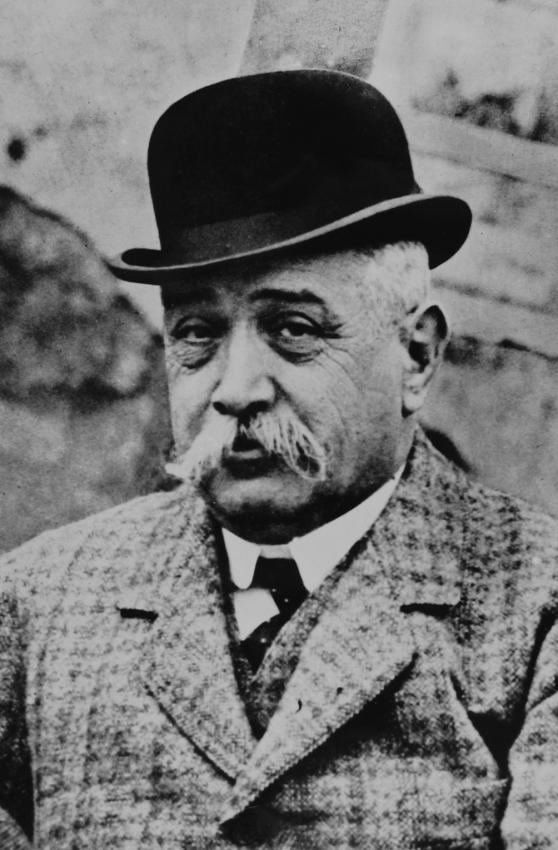
His professional career began with the 1888 Universal Exhibition in Barcelona, for which he built the Palace of Sciences and Agriculture. Shortly afterwards, in 1889, he obtained the post of municipal architect in Barcelona, which marked his trajectory, as it led to his playing an active role in the restructuring of the city. That same year he directed the work of converting the old Ciutadella arsenal into a royal palace, although it was eventually turned into the Museum of Modern Art of Catalonia (and is now the seat of the Parliament of Catalonia, Parc de la Ciutadella).
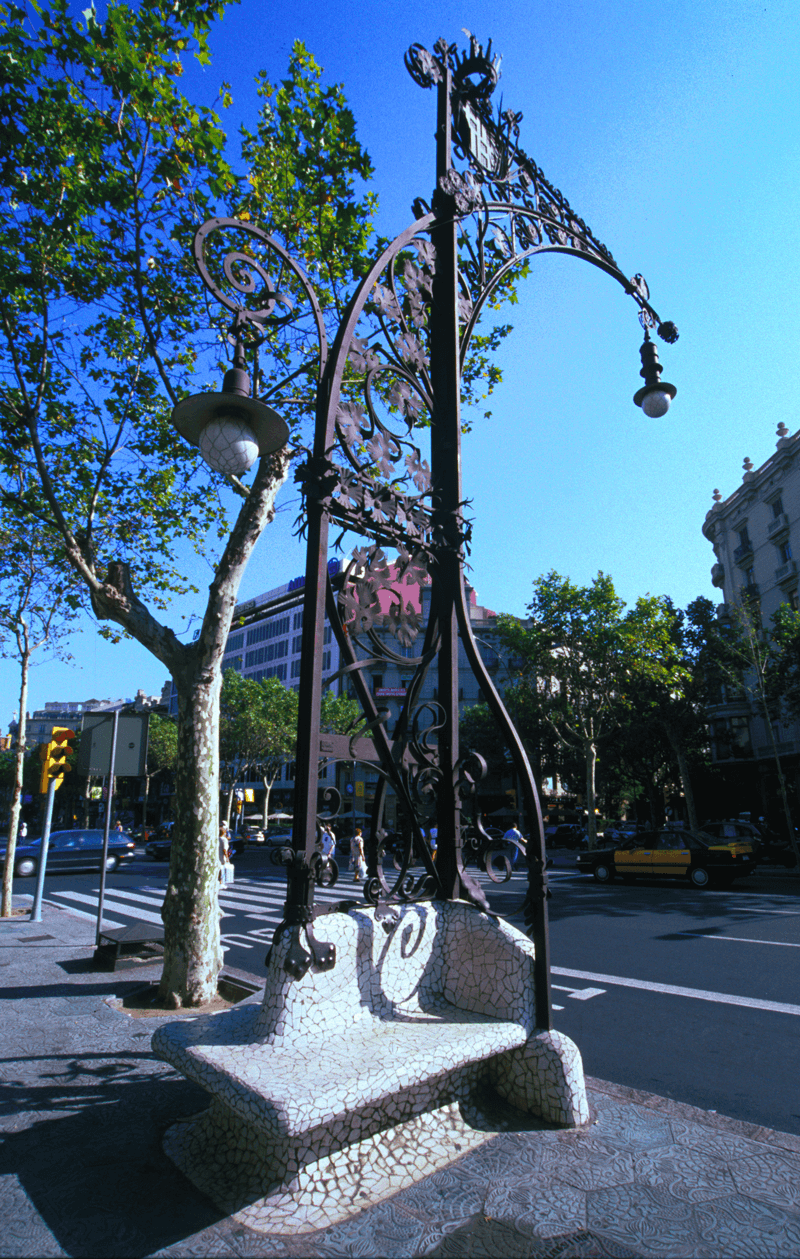
Although the early work by this architect reflects a certain eclectic taste, his style soon evolved towards Modernisme. Throughout his professional career he produced more monumental works, such as the monuments to Francesc Rius i Taulet (1901; Passeig de Lluís Companys), with M. Fuxà, and Frederic Soler Pitarra (1906; Plaça del Teatre), with A. Querol, as well as other buildings and items that made this evolution patent, such as, for example, the benches and lampposts in Passeig de Gràcia in Barcelona (1906) and the canopy of the Torino café (1902; Passeig de Gràcia, 18; no longer in existence).
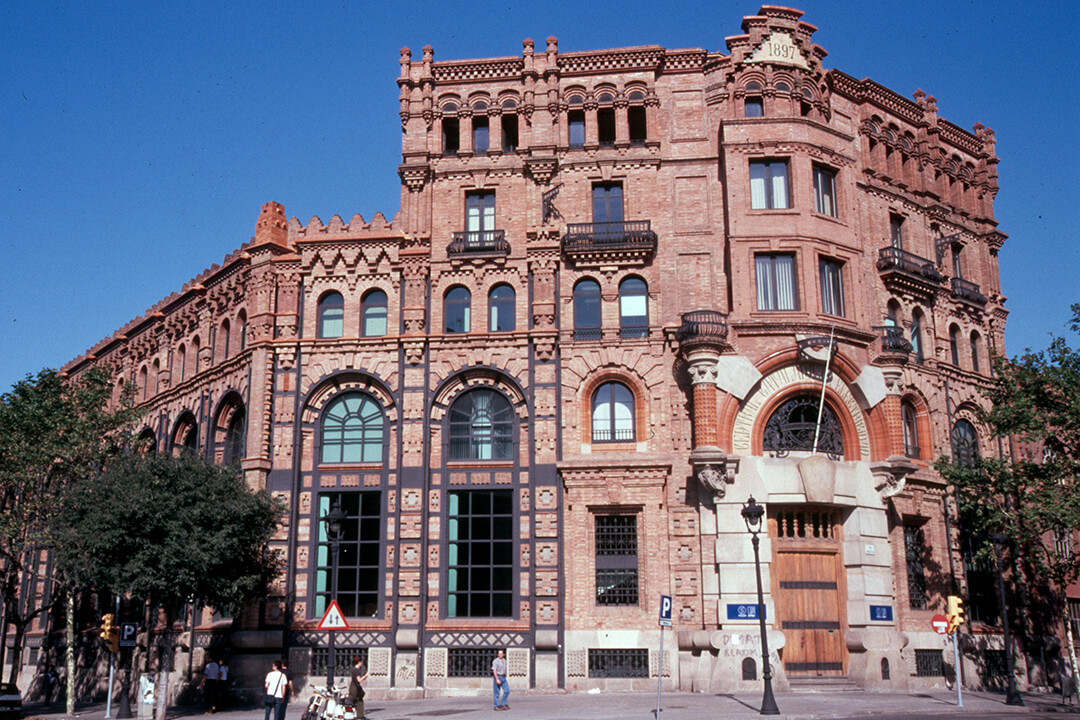
One of his works that caused the greatest impact was the Hidroelèctrica de Catalunya building (1896-1899; Avinguda de Vilanova, 12), with a clear predominance of bricks and iron, which brought him closer to the new trends.
He worked with other architects, such as A. Falguera, on Casa de la Lactància (Nursing Mothers' Home, 1908-1913; Gran Via de les Corts Catalanes, 475-477).
Principal works
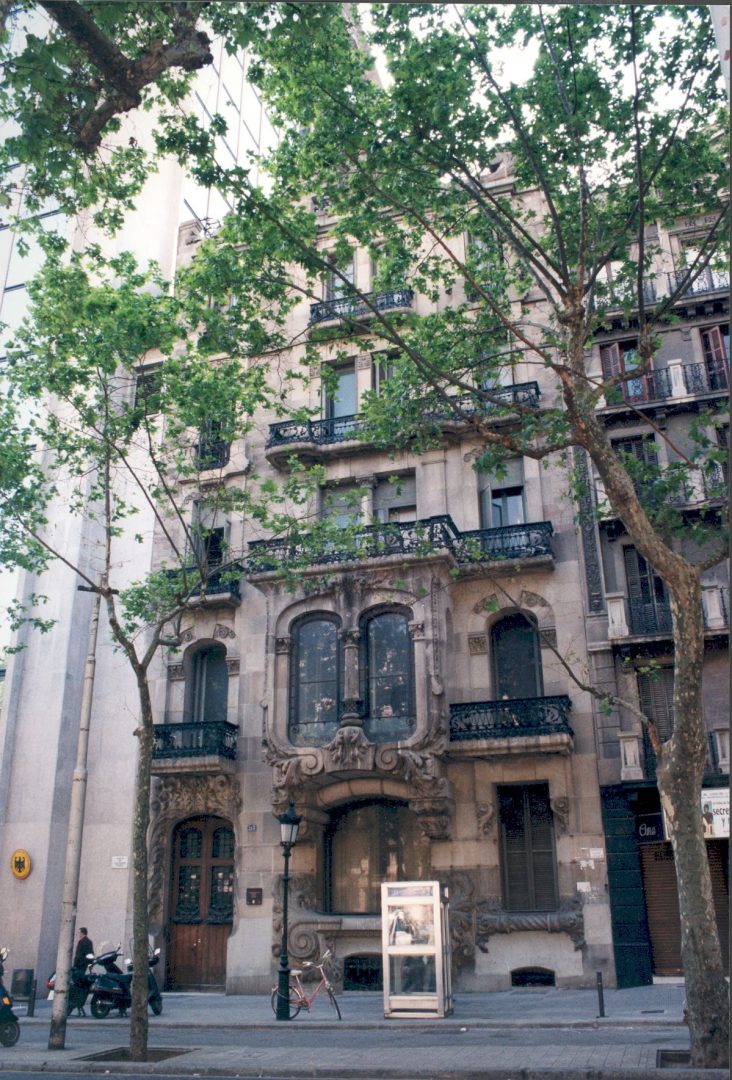
Get the Guidebook of Barcelona Modernisme Route
The Barcelona Modernisme Route is an itinerary through the Barcelona of Gaudí, Domènech i Montaner and Puig i Cadafalch, who, together with other architects, made Barcelona the great capital of Catalan Art Nouveau. With this route you can discover impressive palaces, amazing houses, the temple that is symbol of the city and an immense hospital, as well as more popular and everyday works such as pharmacies, shops, shops, lanterns or banks. Modernisme works that show that Art Nouveau took root in Barcelona and even today is still a living art, a lived art.
The Guidebook of Barcelona Modernisme Route can be acquired in our centers of Modernisme.