

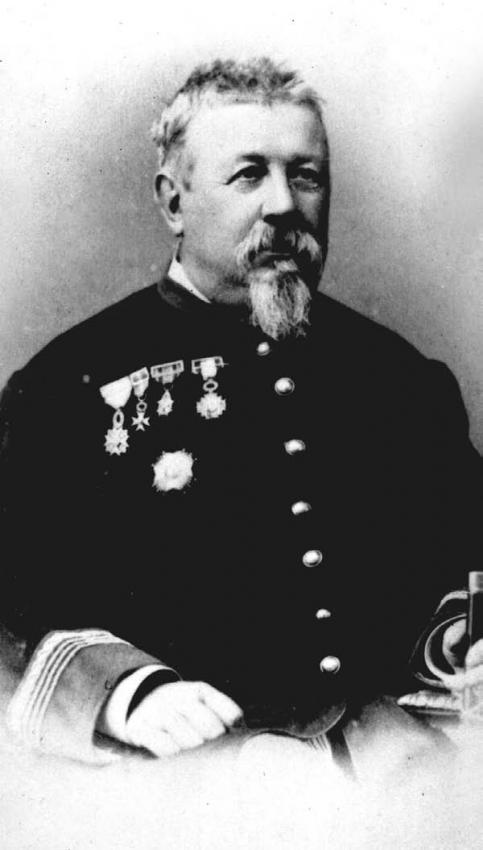
This architect is regarded as Pre-Modernista, as some of his works display an early use of the new language. He graduated from the Real Academia de las Bellas Artes de San Fernando in Madrid (San Fernando Royal Academy of Fine Arts) in 1842. He was municipal architect of Barcelona from 1867 to 1869 and again in 1870.
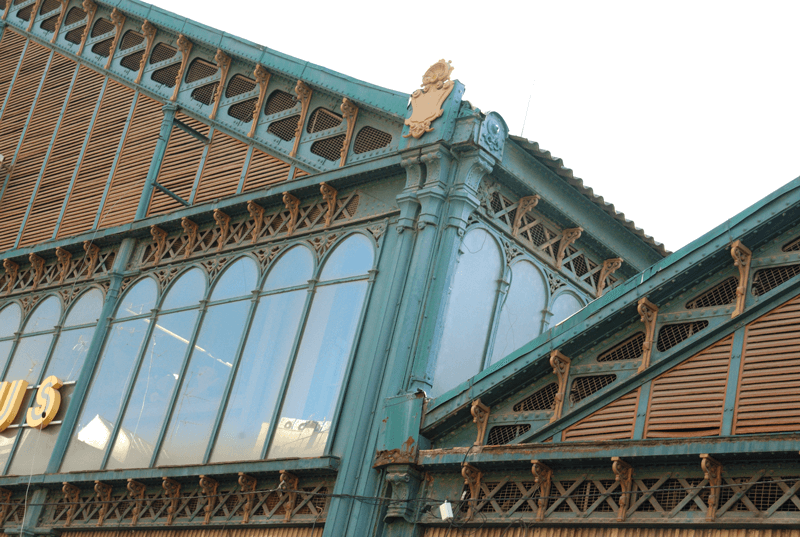
His plan for the expansion of Barcelona, known as the Eixample, was chosen in 1859, but it was the development plan drawn up by the engineer I. Cerdà that was eventually approved by the central government in Madrid. There are many of his works in Barcelona, such as the Neo-Classical Martorell Museum (1879; Parc de la Ciuta-della; now the Natural Sciencie Museum), and he designed various municipal markets, such as the one in Hostafrancs (1888; Creu Coberta, 93), which displays an early Modernisme.
He was the architect of Gràcia and the one who prepared its geometric plan in 1863.
Principal works
Get the Guidebook of Barcelona Modernisme Route
The Barcelona Modernisme Route is an itinerary through the Barcelona of Gaudí, Domènech i Montaner and Puig i Cadafalch, who, together with other architects, made Barcelona the great capital of Catalan Art Nouveau. With this route you can discover impressive palaces, amazing houses, the temple that is symbol of the city and an immense hospital, as well as more popular and everyday works such as pharmacies, shops, shops, lanterns or banks. Modernisme works that show that Art Nouveau took root in Barcelona and even today is still a living art, a lived art.
The Guidebook of Barcelona Modernisme Route can be acquired in our centers of Modernisme.