

Cèsar Martinell i Brunet
Valls (1888) - Barcelona (1973)
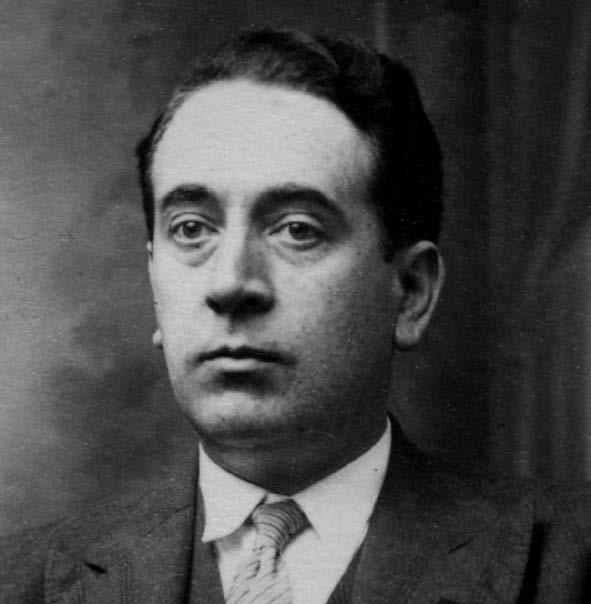
He qualified as an architect in 1916 and, although his early work reflects the Noucentista ("1900-ist", a term coined in 1906 to refer to 20th century Catalan culture) spirit, they contain elements of Modernisme, such as the use of brick and decorative ceramics.
He was a follower of A. Gaudí, although he never worked directly with him. Just after graduating, he was appointed municipal architect of Valls, a post he held until 1918. Between 1918 and 1923 he made agricultural buildings in the Modernista style, of which the Sindicat Agrícola de Cabra del Camp (1920) and the wine cellar in El Pinell de Brai(1919-1922), the so-called Wine Cathedrals, are examples.
He contributed to magazines and daily newspapers such as La Vanguardia, as well as writing several books on architecture.
After 1929 he devoted himself practically full time to restorations and historical research.
Principal works
Sorry for the inconvenience, but we do not have any work for this author.
Get the Guidebook of Barcelona Modernisme Route
The Barcelona Modernisme Route is an itinerary through the Barcelona of Gaudí, Domènech i Montaner and Puig i Cadafalch, who, together with other architects, made Barcelona the great capital of Catalan Art Nouveau. With this route you can discover impressive palaces, amazing houses, the temple that is symbol of the city and an immense hospital, as well as more popular and everyday works such as pharmacies, shops, shops, lanterns or banks. Modernisme works that show that Art Nouveau took root in Barcelona and even today is still a living art, a lived art.
The Guidebook of Barcelona Modernisme Route can be acquired in our centers of Modernisme.