

Enric Granados i Campiña
Lleida (1) - The English Channel (1916)
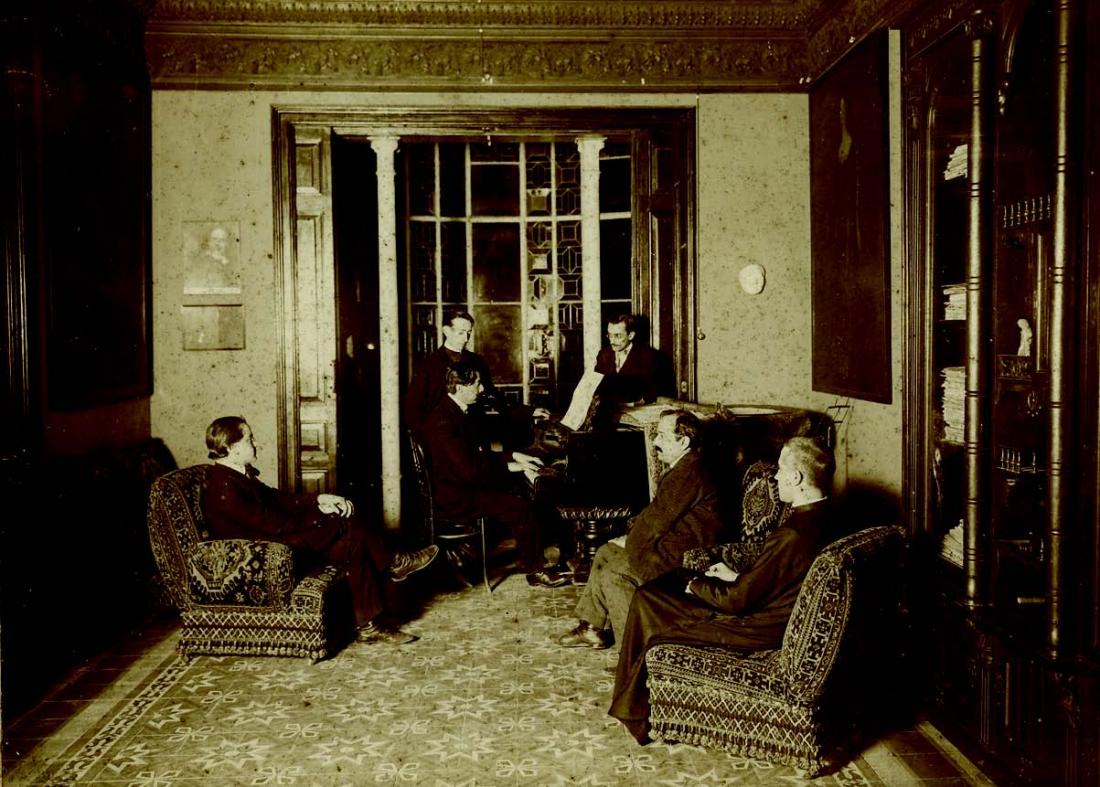
He began his music studies with the pianist J.B. Pujol, but always regarded F. Pedrell as his real master, since it was Pedrell who introduced him to the work of Wagner and had a profound influence on his career. He completed his musical training in Paris with Charles Bériot, staying in the city until 1889, during which time he came into contact with musicians such as Debussy and D'Indy, and strengthened his friendship with I. Albéniz, whom he already knew from Barcelona. Like many other musicians, to begin with he had to play in various cafés in Barcelona, entertaining the customers who had gone out for an evening's entertainment, and giving small piano concerts.
His conception of music was linked to the idea of total art and he collaborated with other intellectuals, especially writers. Between 1901 and 1906 he worked with A. Gual at the Teatre Íntim and later with A. Mestres composing the opera Picarol (Chatterbox) or Petrarca (Petrarch). In 1900 he set up the Classical Concerts Society and in the same period founded the Granados Academy which enjoyed considerable prestige in the Barcelona of that time. His musical production had a cosmopolitan, international air about it, which was criticised by some people, who expected work from him that was more deeply rooted in his cultural tradition. His musical aesthetics were linked to the Romanticism of Schumann, Schubert and Chopin.
He wrote mostly piano works, such as Doce danzas españolas (Twelve Spanish Dances) and Capricho español (Spanish Caprice) and chamber music. He was drowned together with his wife when their ship was attacked by a German submarine as they were on their way back from the première of Goyescas (reflections on Goya's paintings) in New York.
Principal works
Sorry for the inconvenience, but we do not have any work for this author.
Get the Guidebook of Barcelona Modernisme Route
The Barcelona Modernisme Route is an itinerary through the Barcelona of Gaudí, Domènech i Montaner and Puig i Cadafalch, who, together with other architects, made Barcelona the great capital of Catalan Art Nouveau. With this route you can discover impressive palaces, amazing houses, the temple that is symbol of the city and an immense hospital, as well as more popular and everyday works such as pharmacies, shops, shops, lanterns or banks. Modernisme works that show that Art Nouveau took root in Barcelona and even today is still a living art, a lived art.
The Guidebook of Barcelona Modernisme Route can be acquired in our centers of Modernisme.