

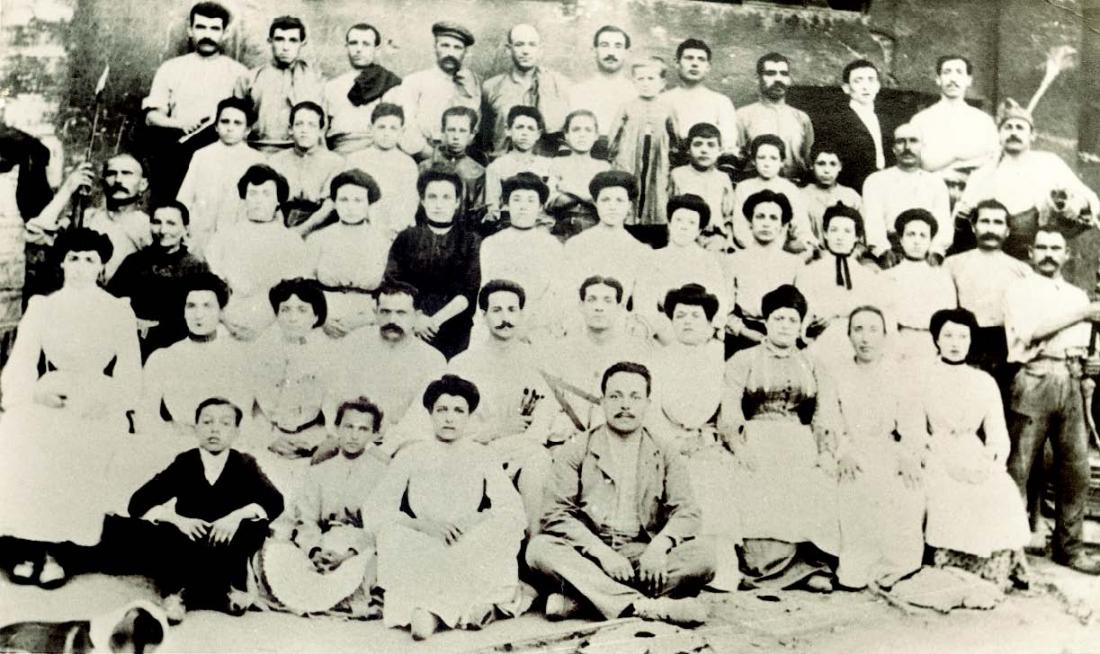
This ceramics factory, popularly known as "La Rajoleta" (The Little Tile, Passatge Puig d'Ossa, s/n, Esplugues de Llobregat), was founded in the mid-18th century. The ceramics it produced were used in the decoration of many Modernista buildings.
In 1876 Jaume Pujol i Baucis bought out his partner Miquel Carbonell i Casas's share in a ceramics manufacturing company they had acquired two years earlier and which had been in operation since 1858. From then on the factory started to grow until it became one of the biggest in the Modernista period.
When Jaume Pujol i Baucis died in 1891, his son Pau Pujol i Vila took over the factory and ran it until 1913. During this period, Pujol i Bausis became an emblematic factory for the design and production of Modernista ceramics at a time when the arts applied to architecture, as seen in chair rails, vents and scales, had taken on a certain importance. Examples of the products of this Esplugues-based firm can still be seen today decorating a large number of Modernista buildings.
It also did important work in the field of research, such as reclaiming and producing metallic reflection ceramics.
The factory made pieces based on the designs of the best architects of the period, such as L. Domènech i Montaner, A. Gallissà, A. Gaudí and J. Puig i Cadafalch, and artists such as L. Bru and A. Gual. It worked on buildings such as Casa Amatller (1898-1900; Passeig de Gràcia, 41), the Hospital de la Santa Creu i Sant Pau (1902-1930; Sant Antoni M. Claret, 167), Park Güell (1900 - 1914), Palau Güell (1885-1889; Nou de la Rambla, 3-5), Casa Navàs (1901-1907; Plaça del Mercadal, 5, Reus), the Pere Mata Psychiatric Institute (1898-1922; Passeig Briansó, s/n, Reus) and Casa Barbey (1910; Passeig, 5 - Figueral, 48, Illa Raspall, La Garriga), to name but a few. Nowadays you can visit the Pujol i Bausis factory grounds and a large collection of ovens in which the ceramics were baked, which belong to the Can Tinturé Tiles Museum (Església, 36), run by Esplugues de Llobregat Town Council. At the time of going to press, the museum is due to become, in the near future, a centre for the study of industrial ceramics, with special reference to Modernisme.
Principal works
Sorry for the inconvenience, but we do not have any work for this author.
Get the Guidebook of Barcelona Modernisme Route
The Barcelona Modernisme Route is an itinerary through the Barcelona of Gaudí, Domènech i Montaner and Puig i Cadafalch, who, together with other architects, made Barcelona the great capital of Catalan Art Nouveau. With this route you can discover impressive palaces, amazing houses, the temple that is symbol of the city and an immense hospital, as well as more popular and everyday works such as pharmacies, shops, shops, lanterns or banks. Modernisme works that show that Art Nouveau took root in Barcelona and even today is still a living art, a lived art.
The Guidebook of Barcelona Modernisme Route can be acquired in our centers of Modernisme.