

Ildefons Cerdà i Sunyer
El Cerdà de la Garga, Centelles (1815) - Caldas de Besaya, north of Spain (1876)
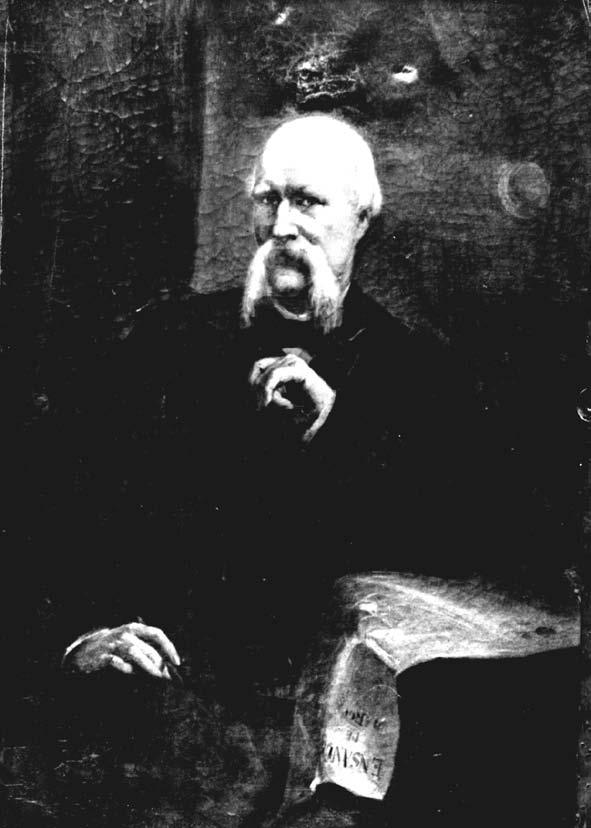
A major figure to be taken into account, as he is the author of the plan for the expansion of Barcelona, known as the Eixample, the district where a large proportion of the most significant buildings of Modernisme were constructed.He first moved to Barcelona where he started to study architecture and mathematics at the Junta de Comerç (Board of Trade). He later moved to Madrid, where he graduated in engineering from the Madrid Engineers' School in 1841. As a civil engineer working for the central government he was sent to different places in Spain, including Barcelona. He left this post in 1849, thanks to the fact that he inherited the family estate, which enabled him to concentrate on his work as a town planner.
He soon became interested in the problems of the urban redevelopment and expansion of Barcelona (at that time, in the middle of the 19th century, the medieval walls were being knocked down and the redevelopment of the city was being discussed) and he applied his public health theories to the matter. In 1859 his plan for the redevelopment of Barcelona was approved by the central government in Madrid, which caused certain misgivings among the inhabitants of Barcelona who generally favoured other plans. He played an extremely active part in the politics of the time and became chairperson of Barcelona Provincial Council from 1873 to 1874, when he was forced to resign.
His major theoretical work was Teoría general de la urbanización (General Theory of Urbanisation) published in 1867.
Principal works
Sorry for the inconvenience, but we do not have any work for this author.
Get the Guidebook of Barcelona Modernisme Route
The Barcelona Modernisme Route is an itinerary through the Barcelona of Gaudí, Domènech i Montaner and Puig i Cadafalch, who, together with other architects, made Barcelona the great capital of Catalan Art Nouveau. With this route you can discover impressive palaces, amazing houses, the temple that is symbol of the city and an immense hospital, as well as more popular and everyday works such as pharmacies, shops, shops, lanterns or banks. Modernisme works that show that Art Nouveau took root in Barcelona and even today is still a living art, a lived art.
The Guidebook of Barcelona Modernisme Route can be acquired in our centers of Modernisme.