

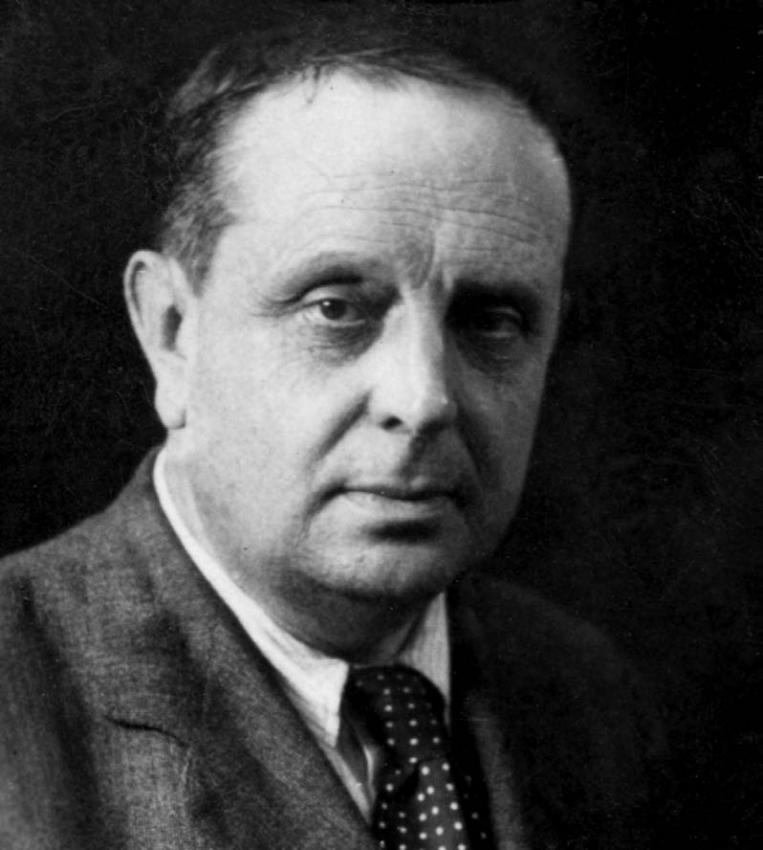
Together with R. Masó, this architect represents the evolution from a late Modernista language to an architecture heavily influenced by Viennese Secessionstil.
He qualified as an architect in 1906 and no sooner had he graduated than he made his first building, Casa Anita Colomer, in Vic (1906; Plaça del Bisbe Oliva), and in 1910, he made the altar in the chapel of Immaculate Mary in the shrine of Montserrat.
As he himself recognised, the influence of A. Gaudí, with whom he had collaborated on the project devised by the latter for the Balmes Festivals in Vic, is evident in his early works. In Barcelona he built the church of El Carme (1909; Bisbe Laguarda, 15). In 1911 he won the Barcelona City Council's best establishment prize for the Espinós chemist's shop (Diputació, 294; no longer in existence). Shortly afterwards, in 1912, he won the competition to make the monument to Jacint Verdaguer (1914; Plaça de Mossèn Jacint Verdaguer), together with the sculptor Joan Borrell and the Oslé brothers, which combines elements of Modernisme and Noucentisme ("1900-ism", a term coined in 1906 to refer to 20th century Catalan culture).
In 1916, together with R. Masó, he won the competition to build the Mental Clinic in Santa Coloma de Gramenet, a project which shows the development of both architects towards a more Noucentista idiom influenced by the new European trends, although it was not actually constructed according to these plans.
He became diocesan architect of Vic in 1912 and of Barcelona in 1922.
Principal works
Sorry for the inconvenience, but we do not have any work for this author.
Get the Guidebook of Barcelona Modernisme Route
The Barcelona Modernisme Route is an itinerary through the Barcelona of Gaudí, Domènech i Montaner and Puig i Cadafalch, who, together with other architects, made Barcelona the great capital of Catalan Art Nouveau. With this route you can discover impressive palaces, amazing houses, the temple that is symbol of the city and an immense hospital, as well as more popular and everyday works such as pharmacies, shops, shops, lanterns or banks. Modernisme works that show that Art Nouveau took root in Barcelona and even today is still a living art, a lived art.
The Guidebook of Barcelona Modernisme Route can be acquired in our centers of Modernisme.