

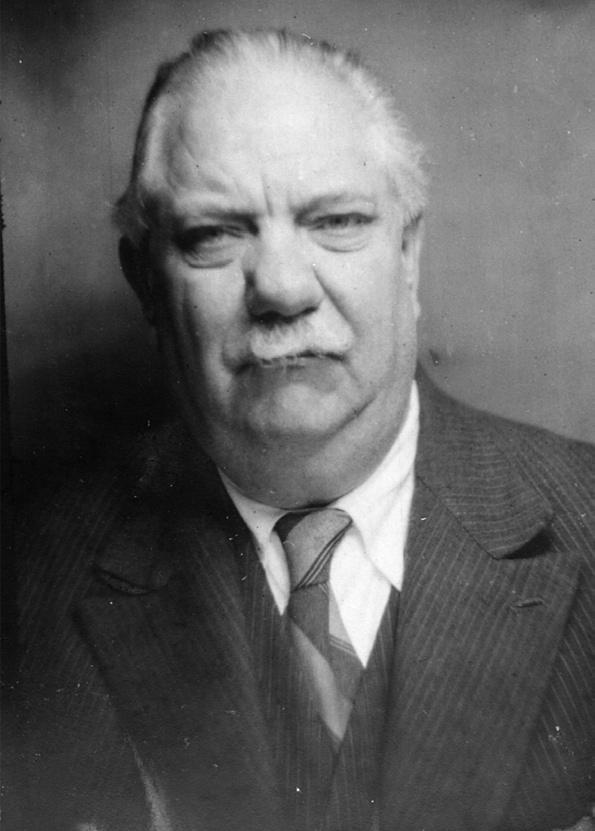
He studied at the Barcelona School of Architecture from which he graduated in 1907 and where he was later a professor (1920-1950).
From the beginning he collaborated with his father, the architect L. Domènech i Montaner, on the Pere Mata Psychiatric Institute (1898-1922; Passeig de Briansó, s/n, Reus) and from 1912 took over from his father the works of the Hospital de la Santa Creu i Sant Pau (1902-1930; Sant Antoni Maria Claret, 167) and Casa Domènech (1908-1910; Riera Gavarra, 2, Canet de Mar; currently the Domènech i Montaner House-Museum), on which he also worked with his brother-in-law, Francesc Guàrdia.
His individual production combines certain features of Modernisme with elements of Noucentisme ("1900-ism", a term coined in 1906 to refer to 20th century Catalan culture), as in the Cooperativa Agrícola (Agricultural Cooperative) in Espluga de Francolí (1913; Avinguda de J.M. Rendé i Ventosa, 5, L'Espluga de Francolí) and Casa Marco (1926; Raval de Santa Anna, 23-25, Reus).
His works for the 1929 Barcelona International Exhibition, of which he was the directing architect, were entirely Noucentista. He worked on this project together with other architects such as E. Catà, on the Palau Nacional (1927-1929; currently the National Museum of Art of Catalonia, MNAC) and designed Montjuïc Stadium (1926-1929; Passeig Olímpic, 17-19).
Principal works
Sorry for the inconvenience, but we do not have any work for this author.
Get the Guidebook of Barcelona Modernisme Route
The Barcelona Modernisme Route is an itinerary through the Barcelona of Gaudí, Domènech i Montaner and Puig i Cadafalch, who, together with other architects, made Barcelona the great capital of Catalan Art Nouveau. With this route you can discover impressive palaces, amazing houses, the temple that is symbol of the city and an immense hospital, as well as more popular and everyday works such as pharmacies, shops, shops, lanterns or banks. Modernisme works that show that Art Nouveau took root in Barcelona and even today is still a living art, a lived art.
The Guidebook of Barcelona Modernisme Route can be acquired in our centers of Modernisme.