

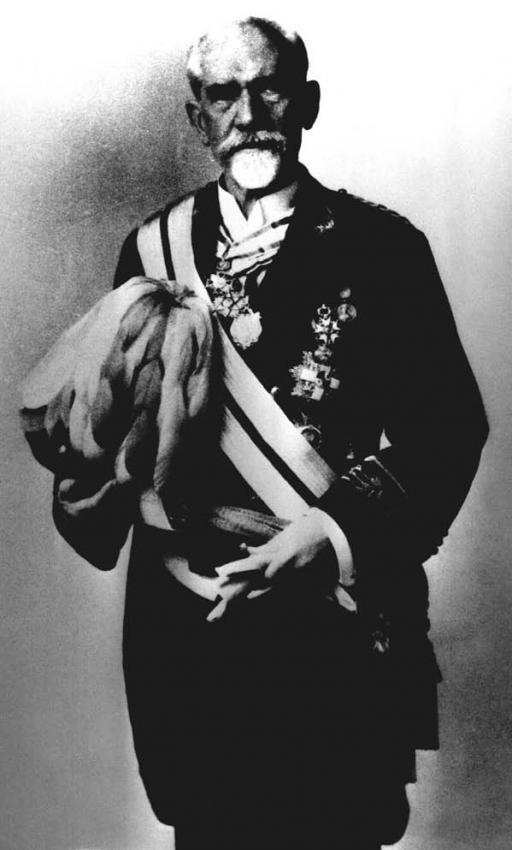
He qualified as a public works engineer in 1880 and six years later, in 1886, as an architect.
He was chief architect of Barcelona City Council and responsible for the city's sanitary plans in 1891. Ideologically, he promulgated the ideas of public health and sanitation, following on from the studies initiated by I. Cerdà, and compiled extremely accurate and useful statistics on the subject for the city. He applied this same expertise to his facet as an architect and produced several theoretical studies on the matter, such as Proyecto de saneamiento del subsuelo de Barcelona (Project for the Cleansing of the Subsoil of Barcelona, 1893). He was dismissed from his post with Barcelona City Council as a result of internal problems before work on his plan for sanitation and new sewers for the city had begun.
In 1917 he started work in Madrid as a public works inspector, a post which he held for ten years, but still kept up his links with Barcelona during this time, as his family continued to live there.
As an architect he is known to have designed a number of works in Barcelona, such as his own house, Vil·la Rosita (Príncep d'Astúries, 15; no longer in existence), and, together with the architect E. Sagnier, he designed the Duana Nova (New Customs building, 1896-1902; Passeig de Josep Carner, 27 - 29), in an eclectic style.
He was also involved in drawing up plans for the sewerage system and growth of Cartagena and Murcia (1893 and 1897, respectively).
Principal works
Sorry for the inconvenience, but we do not have any work for this author.
Get the Guidebook of Barcelona Modernisme Route
The Barcelona Modernisme Route is an itinerary through the Barcelona of Gaudí, Domènech i Montaner and Puig i Cadafalch, who, together with other architects, made Barcelona the great capital of Catalan Art Nouveau. With this route you can discover impressive palaces, amazing houses, the temple that is symbol of the city and an immense hospital, as well as more popular and everyday works such as pharmacies, shops, shops, lanterns or banks. Modernisme works that show that Art Nouveau took root in Barcelona and even today is still a living art, a lived art.
The Guidebook of Barcelona Modernisme Route can be acquired in our centers of Modernisme.