

Lluís Millet i Pagès
El Masnou (1867) - Barcelona (1941)
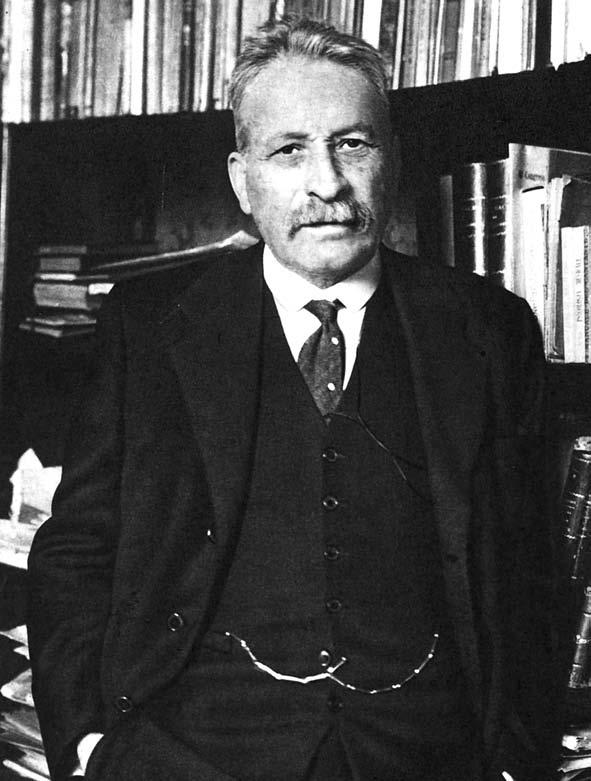
After his family moved to Barcelona, he joined the Liceu Conservatory at a very early age. While studying he worked as an assistant in the Can Guàrdia music shop (Rambla, 97; now Casa Beethoven).
When he had finished his studies he started to perform in various cafés, such as the Pelayo café (no longer in existence), where he played in a quartet, and also gave private lessons, jobs through which he became known and acquired a certain prestige. At these musical evenings a group of friends was formed, which included musicians such as A. Vives and I. Albéniz.
In 1891, together with A. Vives, he founded the Orfeó Català, a choral society which was to become a symbol of Catalanism as a result of the part it played in disseminating Catalan culture and music through its performances, with an extremely diverse repertoire, and the magazine it published, Revista Musical Catalana, which was set up in 1904. It was under his direction that the Orfeó's headquarters, the Palau de la Música Catalana (1905-1908; Palau de la Música, 4-6), was constructed. Designed by the architect L. Domènech i Montaner, it has become one of the most iconic Modernista buildings in Barcelona. Some years later he was appointed as a professor at the Barcelona Municipal School of Music, a job he combined with his work as a theoretician and composer.
He composed the music of such emblematic works as El cant de la senyera (The Song of the Flag) a poem by Joan Maragall, and harmonised Els segadors (The Reapers), the Catalan national anthem.
Principal works
Sorry for the inconvenience, but we do not have any work for this author.
Get the Guidebook of Barcelona Modernisme Route
The Barcelona Modernisme Route is an itinerary through the Barcelona of Gaudí, Domènech i Montaner and Puig i Cadafalch, who, together with other architects, made Barcelona the great capital of Catalan Art Nouveau. With this route you can discover impressive palaces, amazing houses, the temple that is symbol of the city and an immense hospital, as well as more popular and everyday works such as pharmacies, shops, shops, lanterns or banks. Modernisme works that show that Art Nouveau took root in Barcelona and even today is still a living art, a lived art.
The Guidebook of Barcelona Modernisme Route can be acquired in our centers of Modernisme.